
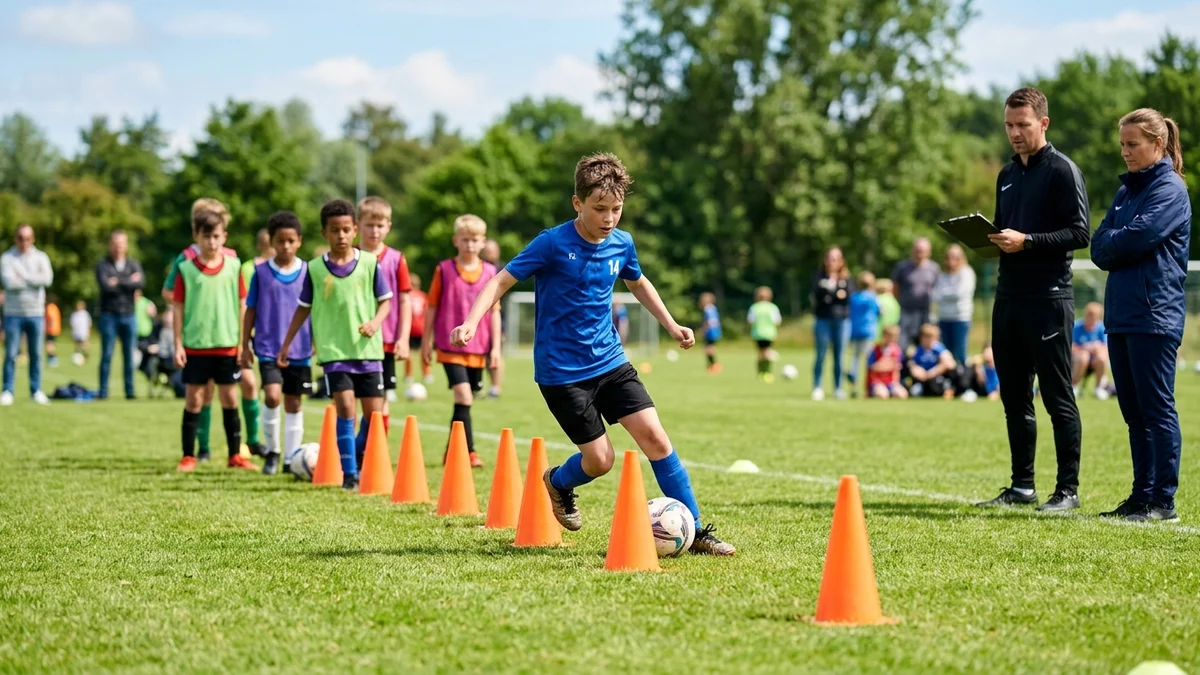
How to Prepare for Youth Soccer Tryouts: Tips for Players and Parents
How to Prepare for Youth Soccer Tryouts: Tips for Players and Parents
Quick answer: Effective preparation for youth soccer tryouts involves a balanced approach combining physical conditioning, technical skill refinement, a positive mindset, and understanding what coaches value for specific age groups, with clear plans for the days leading up to and following the event.
Updated June 2026. This comprehensive guide provides actionable advice for parents and young soccer players (ages 9-14) facing upcoming tryouts.
The Mindset That Wins Tryouts
For younger players, particularly in the U9 to U12 age brackets, coaches often prioritize attitude and coachability over raw, unrefined talent. While technical skills are important, a player's willingness to listen, learn, and engage positively with instructions can be a significant differentiator. The underlying message for players should be to "show up to learn, not to show off." This means being receptive to feedback, trying new things, and demonstrating a genuine desire to improve. It's about contributing to the team environment and showing potential for growth.
A common pitfall for both young players and their parents is displaying visible frustration or arguing with coaches during tryouts. Such behaviors are not only counterproductive but also actively noticed by coaches in a negative light. Instead of focusing on mistakes or perceived unfairness, players should be encouraged to maintain a composed demeanor, learn from every drill, and accept constructive criticism gracefully. A positive and resilient attitude signals maturity and a commitment to the team's success, qualities that coaches highly value.
Parents play a crucial role in shaping this mindset. It's essential to communicate to your child that the goal of the tryout is to give their best effort and enjoy the experience, regardless of the outcome. Reinforce that learning is a continuous process and that every opportunity, even one that doesn't result in a spot on the desired team, is a chance to get better. This perspective helps alleviate pressure and allows the child to perform more naturally and confidently.
Physical Preparation (4-8 Weeks Out)
Building a solid physical foundation is paramount for sustained performance throughout a tryout. Start by establishing a consistent cardiovascular base. Aim for running sessions two to three times per week, focusing on a moderate pace for 15 to 20 minutes. This is not about sprinting; it's about developing endurance so players can maintain their energy levels and focus for the entire duration of the tryout sessions. A strong aerobic base will allow players to perform at a higher intensity for longer periods, making them more effective on the field.
Alongside cardio, dedicate time to ball work. Juggling is an excellent drill for improving touch and confidence, even for beginners. Encourage players to aim for a modest goal, such as 20 consecutive juggles, and gradually increase this as they improve. Practicing basic passing against a wall, focusing on accuracy and using both feet, is also highly beneficial. Furthermore, incorporating first touch drills, where players receive a pass and control it cleanly, is essential. A good first touch is fundamental to effective play and is closely observed by coaches.
Speed and agility are critical components of soccer, particularly for younger players where acceleration and quick changes of direction are key. Introduce short sprints, focusing on distances of 10 to 20 yards, twice a week. These drills help develop explosive power and the ability to beat opponents or recover defensively. It's important to balance this training with adequate rest. Critically, players should avoid any strenuous training for at least 48 hours before the tryouts commence. Showing up well-rested and fresh is vital for optimal performance and decision-making.
Technical Skills to Sharpen
The first touch, or ball reception, is one of the most scrutinized skills during tryouts. Coaches closely observe how a player controls the ball when it comes to them, whether it's from a pass, a clearance, or a rebound. A clean, controlled first touch allows a player to play faster and more effectively, setting up their next move. Practicing receiving the ball with different parts of the foot (inside, outside, sole) and with different surfaces of the body (chest, thigh) can significantly improve this fundamental skill.
Passing accuracy with both feet is another area coaches pay close attention to. While many players naturally favor their dominant foot, demonstrating proficiency with their weaker foot can be a major advantage. Encourage players to practice passing against a wall, focusing on consistent accuracy and appropriate weight of the pass. This includes using both the inside and outside of the foot for different types of passes. Developing a reliable weaker foot can make a player more versatile and unpredictable.
For defensive skills, focus on the proper body position when marking an opponent. This involves staying low, balanced, and facing the attacker, with arms out for balance. The goal is to make it difficult for the attacker to advance or pass, without diving in recklessly. Basic shooting technique, emphasizing proper foot placement and follow-through, is also important. For players U11 and under, heading the ball is typically not a required skill in most programs due to safety considerations, so there's no need to focus extensively on this aspect at these younger ages.
What Coaches Are Actually Looking For (By Age)
Coaches evaluate players differently based on their age and developmental stage. For players in the U9 and U10 age groups, the primary focus is on a player's work rate and overall attitude. Coaches look for enthusiasm, a willingness to run and compete, and a basic understanding of controlling the ball. The ability to defend, even in a rudimentary way, and a positive response to instruction are also key indicators of potential.
As players move into the U11 and U12 age brackets, technical skills under light pressure become more important. Coaches will assess how well players can execute skills like dribbling, passing, and receiving when challenged by an opponent. Awareness of positioning on the field, understanding where to be relative to the ball and teammates, starts to become a factor. Communication with teammates, even simple calls or encouragement, also begins to be noticed.
For the U13 and U14 age groups, the game becomes more complex, and coaches look for a developing tactical understanding. This includes recognizing formations, understanding off-ball movement, and making smart decisions. Physical attributes, such as speed, strength, and stamina, begin to play a more significant role as players mature. The ability to "read the game" – anticipating plays and reacting appropriately – is a critical skill at this level.
Here's a summary of what coaches typically seek:
| Age Group | Key Focus Areas |
|---|---|
| U9-U10 | Work rate, attitude, basic ball touch, willingness to defend, coachability. |
| U11-U12 | Technical execution under pressure, positional awareness, communication, basic tactical understanding. |
| U13-U14 | Tactical understanding, decision-making, physical attributes, reading the game, advanced technical skills. |
Day-Before Checklist
To ensure your child is as prepared as possible for the tryout, a thorough checklist for the day before is essential. First, gather all necessary gear. This includes properly fitting cleats, shin guards, and appropriate soccer socks (like those found in our best grip socks for soccer review). Ensure their soccer ball is inflated and ready, and pack a reusable water bottle. A reliable backpack, such as the Laripop Boys backpack, is perfect for carrying everything. Make sure cleats are clean and ready to go, and check the condition of shin guards and socks. For a complete list, refer to our guide on what to bring to soccer tryouts.
Prioritize sleep. For children aged 8-12, aiming for 9 to 10 hours of quality sleep is crucial for physical and mental recovery. A consistent sleep schedule leading up to the tryout can make a significant difference. For dinner, stick to a normal, balanced meal. Avoid introducing any new or heavy foods that might upset their stomach or disrupt their sleep. Familiar, healthy options are best.
Confirm the exact location of the tryout and the precise arrival time. Knowing this in advance reduces last-minute stress. Finally, have a quiet, encouraging conversation with your child. Reassure them of your support and express pride in their effort and courage for trying out. A simple message like, "I'm proud of you for trying out. Play hard and enjoy it," can go a long way in boosting their confidence and reducing performance anxiety.
Day-Of Checklist
On the day of the tryouts, aim to arrive at least 15 minutes before the scheduled start time. This allows your child to get accustomed to the environment, find parking, and avoid rushing. It also provides an opportunity for them to use the restroom and mentally prepare. Before the official session begins, encourage a light warm-up. This could include some light jogging, dynamic stretching, and a few touches of the ball to get their muscles activated and their touch sharp. This proactive approach ensures they are ready to perform from the first whistle.
If possible, and if the coaches are approachable, have your child introduce themselves to the coach. This simple act of confidence can make a positive impression. During instructions, emphasize the importance of making eye contact with the coaches. This shows attentiveness and respect. When the drills involve receiving passes or playing in small-sided games, encourage your child to actively call for the ball. Coaches often interpret this as a sign of confidence and a desire to be involved, which is a positive trait.
It's vital for players to remain engaged and active even when they don't have possession of the ball. This means moving into open spaces, supporting teammates, and maintaining defensive shape. Coaches observe off-ball movement and work rate just as much as what happens when a player has the ball. If a mistake occurs – a missed pass, a lost tackle, or a poor shot – the key is to shake it off immediately and refocus on the next play. Dwelling on errors can lead to a cascade of further mistakes. Encourage resilience and a forward-looking attitude.
What NOT to Do
During tryouts, certain behaviors can be detrimental to a player's chances. Most importantly, players should never argue with coaches or officials. This includes questioning calls, demonstrating dissent, or engaging in any form of confrontation. Such actions are unprofessional and reflect poorly on the player's temperament and coachability. Similarly, avoid showing visible frustration on the field. Slamming the ball, throwing hands up in exasperation, or displaying a negative body language can be off-putting to coaches and detract from a player's overall impression.
Another common mistake is "coasting" through scrimmages to conserve energy. Coaches are looking for consistent effort throughout the entire tryout. Players who appear to be holding back or not giving their full effort, even in the latter stages of drills or games, will be noticed negatively. Tryouts are a limited opportunity to showcase talent and commitment, and every moment counts. Finally, discourage players from spending excessive time talking with friends instead of focusing on the task at hand. While camaraderie is important, tryouts are a time for serious assessment, and a lack of focus can be misinterpreted as disinterest or a lack of seriousness.
Managing the Outcome
After the tryout concludes, the process of managing the outcome begins. If your child is offered a spot, but it's on a team that might be perceived as lower than expected, take the time to discuss it as a family. Sometimes, playing at a developmental level that matches the child's current skills and confidence can be more beneficial for long-term growth than being on a higher-level team where they might struggle. Consider the coaching, team environment, and playing time opportunities.
If your child is not offered a spot on the team, it's important to acknowledge their feelings of disappointment. Allow them a day to process their emotions. Afterward, help them reframe the experience as motivation. This setback can be a powerful catalyst for improvement. Encourage them to identify areas they need to work on and to use this experience to fuel their training for future opportunities. Exploring additional clubs is also a viable option; sometimes, a different club's philosophy or team needs might be a better fit. You can start by looking at options in our find youth soccer clubs near you directory.
Ultimately, tryouts are a part of the youth soccer journey for many players. Whether successful or not, each experience offers valuable lessons. Focus on the effort, the learning, and the continued love for the game. Remember that readiness for club soccer can vary, and our guide on is my child ready for club soccer can offer further perspective. This entire process is covered in more detail in our youth soccer tryout guide hub.
Find Youth Soccer Clubs Near You
If you're looking for opportunities to further develop your child's soccer skills or find a team that fits your family's needs, exploring local clubs is a great next step. Use our comprehensive directory to find youth soccer clubs near you and discover the best fit for your young athlete.
Keep Reading
For more help comparing options and planning the next step, keep going with:
- Best soccer cleats for youth players
Frequently Asked Questions
What should my child focus on for soccer tryouts if they are between 9 and 12 years old?
What are common mistakes parents and players make during soccer tryouts?
How can I help my child prepare physically for soccer tryouts in the weeks leading up to them?
What kind of technical skills should my child practice before tryouts?
What is the most important mindset for my child to have going into tryouts?
How should parents support their child during soccer tryouts?
Related Articles

How to Gain Confidence in Soccer: 8 Proven Mental Strategies
Build your soccer confidence with 8 proven mental strategies — positive self-talk, goal-setting, handling mistakes, and pre-game routines for youth players.

How to Get Better at Soccer: 10 Proven Tips for Youth Players
Want to get better at soccer? These 10 proven tips cover ball control, fitness, mental toughness, tactical thinking, and consistent training habits.
Soccer Speed Training: 7 Drills to Get Faster on the Field
Improve your speed on the soccer field with interval sprints, acceleration drills, and agility work. Proven speed training methods for youth players and coaches.

Fun Christmas Soccer Training Activities for Kids and Teams
Find fun Christmas soccer training activities for kids, teams, and winter break sessions, with festive drills for dribbling, passing, and shooting.