
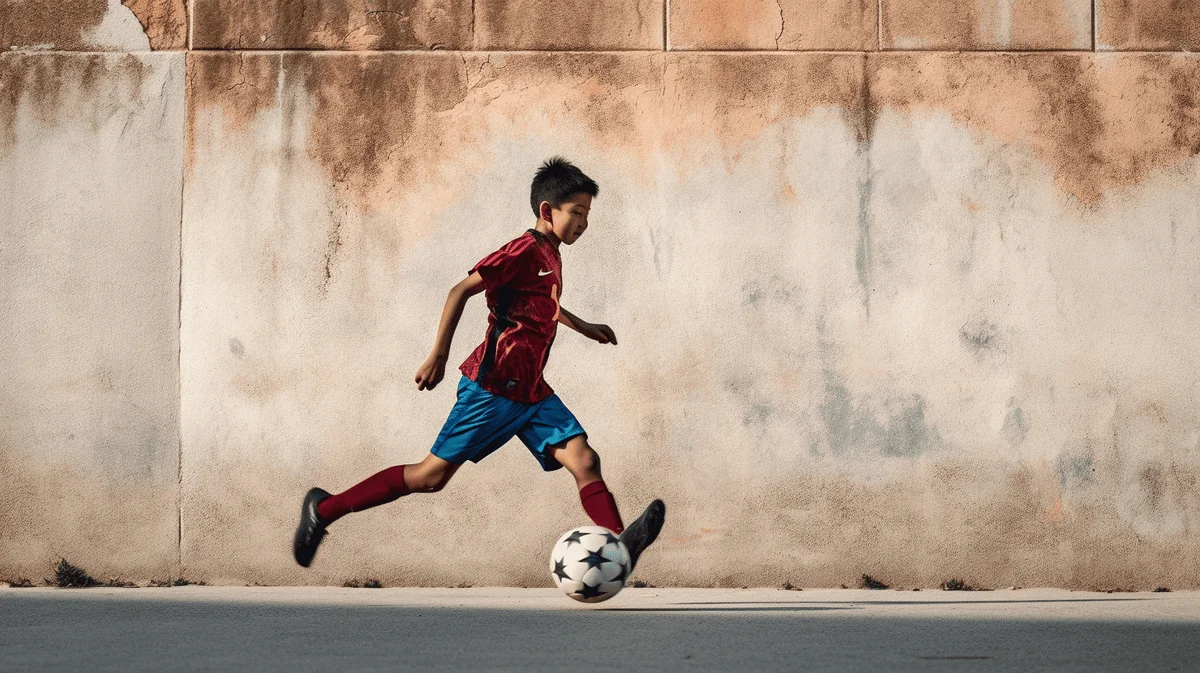
Soccer Warmups: 10 Essential Pre-Game Exercises to Prevent Injury
Soccer warmups should prepare players to move well, react quickly, and compete safely from the first whistle. A good routine raises body temperature, activates key muscle groups, and adds ball work so players feel ready instead of flat.
This guide covers 10 essential soccer warmups, explains dynamic versus static stretching, and includes a practical 15-minute pre-game routine for youth players and coaches.
How Long Should a Soccer Warmup Be?
Most youth soccer warmups should last 10 to 15 minutes. That is usually enough time to elevate the heart rate, mobilize the hips and hamstrings, add short accelerations, and finish with simple ball actions. Longer is not always better. The goal is to arrive sharp, not tired.
Dynamic vs. Static Warmups
Dynamic movements belong before training or games because they prepare the body for speed, change of direction, and repeated effort. Static stretching is better after the session or as part of a separate mobility block. Before kickoff, think movement first.
- Dynamic before soccer: leg swings, skips, lunges, shuffles, accelerations
- Static after soccer: calf stretch, hamstring stretch, quad stretch, hip flexor hold, groin stretch
10 Essential Soccer Warmups
1. Light jog and movement prep
Difficulty: Beginner. Start with 2 minutes of easy jogging, side shuffles, and backward movement. This begins the transition from standing around to athletic movement.
2. High knees
Difficulty: Beginner. Drive the knees up while staying tall and active through the feet. Use 2 sets of 15 to 20 yards.
3. Butt kicks
Difficulty: Beginner. Keep the cadence quick and relaxed. This helps wake up the hamstrings before faster running.
4. Walking lunges with rotation
Difficulty: Beginner to intermediate. Step into each lunge with control and rotate over the front leg. This opens the hips and trunk.
5. Leg swings
Difficulty: Beginner. Use front-to-back and side-to-side swings for 8 to 10 reps per leg. Keep the movement controlled instead of forcing range.
6. Open and close the gate
Difficulty: Beginner. Lift the knee, rotate the hip outward, then repeat inward. This is a simple way to prepare the groin and hip capsule.
7. Carioca or grapevine steps
Difficulty: Intermediate. Add coordination and rotational movement. Keep the steps smooth, not frantic.
8. Short accelerations
Difficulty: Intermediate. Run 3 to 4 short buildups over 10 to 15 yards, increasing effort gradually. Players should feel quick, not maxed out.
9. First-touch passing
Difficulty: Beginner to intermediate. Pair players up for short passes with one-touch and two-touch patterns. This connects the physical warmup to actual soccer actions.
10. Ball mastery pattern
Difficulty: Beginner. Finish with toe taps, foundations, inside-outside touches, or short dribbling moves. Our guide to how to prep for a soccer game explains how this fits into a full pre-match routine.
15-Minute Soccer Warmup Routine
| Minute | Focus |
|---|---|
| 0 to 3 | Jog, side shuffle, backward run |
| 3 to 7 | High knees, butt kicks, lunges, leg swings |
| 7 to 10 | Open-close gate, carioca, hip and groin activation |
| 10 to 12 | Short accelerations and decelerations |
| 12 to 15 | Passing, first touch, and quick ball work |
Why Ball Work Should Be Included
Soccer players should not warm up like generic runners only. The final minutes should include passes, first touch, scanning, and simple dribbling actions so players enter the session already connected to the ball.
Trusted Youth Development Guidance
For broader player-development standards, coaches and parents should review resources from US Youth Soccer and U.S. Soccer coaching education. Warmups should match the age, load, and environment of the player.
FAQs
What are good soccer warmups?
Good soccer warmups use dynamic movement, hip mobility, short accelerations, and ball work. They prepare players physically and mentally without causing fatigue.
How long should you warm up before soccer?
Most players do well with 10 to 15 minutes. Younger players may need a slightly shorter version, while colder weather may require a little longer.
Should soccer warmups include the ball?
Yes. Passing, first touch, and simple dribbling help players feel more prepared than movement-only warmups.
Keep Reading
Next, review our guides to soccer stretches, soccer agility drills, and optimal training for youth soccer.
Related Articles

How to Gain Confidence in Soccer: 8 Proven Mental Strategies
Build your soccer confidence with 8 proven mental strategies — positive self-talk, goal-setting, handling mistakes, and pre-game routines for youth players.

How to Get Better at Soccer: 10 Proven Tips for Youth Players
Want to get better at soccer? These 10 proven tips cover ball control, fitness, mental toughness, tactical thinking, and consistent training habits.

Soccer Speed Training: 7 Drills to Get Faster on the Field
Improve your speed on the soccer field with interval sprints, acceleration drills, and agility work. Proven speed training methods for youth players and coaches.

Fun Christmas Soccer Training Activities for Kids and Teams
Find fun Christmas soccer training activities for kids, teams, and winter break sessions, with festive drills for dribbling, passing, and shooting.