
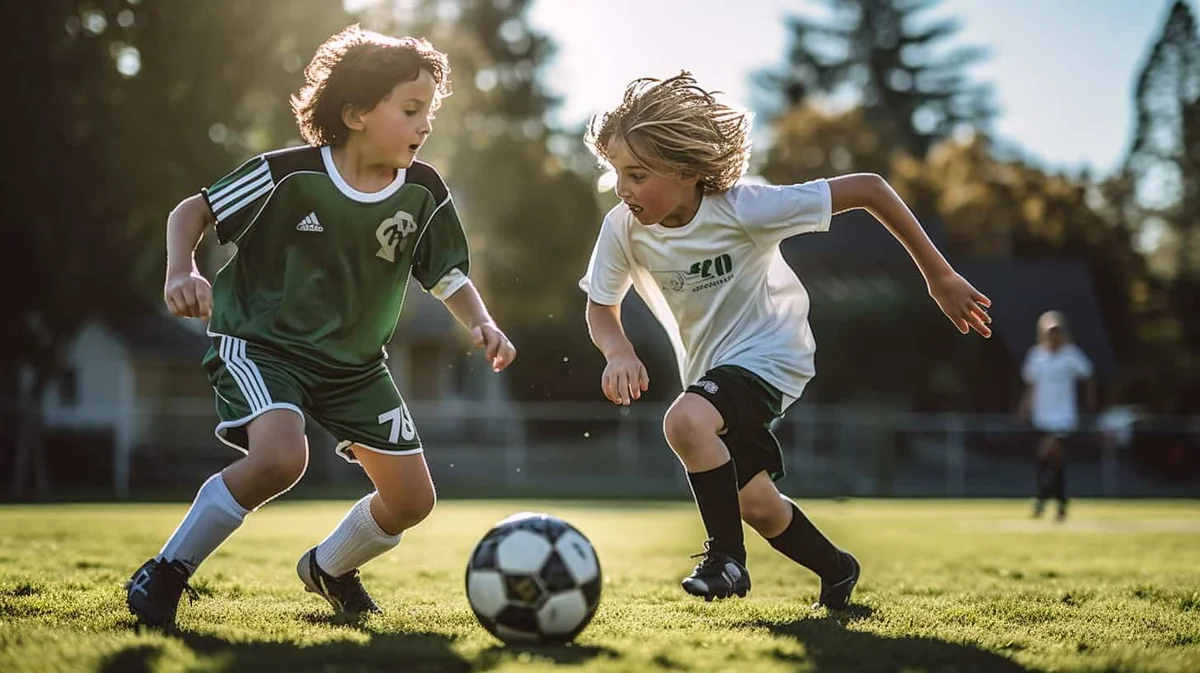
Defensive Soccer Drills: 8 Essential Exercises for Youth Players
Strong defending is more than tackling. Good defenders read cues, stay balanced, protect the center, and work with teammates so the team stays compact. Youth defenders improve fastest when coaches teach defending as a decision-making skill, not just an effort skill.
This guide breaks down the key principles of defensive soccer and gives you eight drills that help players defend better in real game situations.
Key Principles of Defensive Soccer
- Pressure: close down the ball with control
- Cover: provide support behind the first defender
- Balance: protect weak-side space and central lanes
- Patience: delay until the right moment instead of diving in
8 Defensive Soccer Drills
1. Defensive stance and shuffle
Difficulty: Beginner. Teach a low stance, quick feet, and controlled closing distance.
2. 1v1 channel defending
Difficulty: Beginner to intermediate. Defenders learn to angle play away from goal and force mistakes instead of lunging in.
3. Delay and recover drill
Difficulty: Intermediate. Defenders slow the attacker long enough for teammates to recover behind the ball.
4. Tackle timing drill
Difficulty: Intermediate. Focus on when to poke, block, or hold instead of tackling blindly.
5. Pressure-cover-balance game
Difficulty: Intermediate. Small groups defend together and rotate roles based on ball movement.
6. Back-line shifting drill
Difficulty: Intermediate to advanced. The line moves side to side to protect the center and stay connected.
7. Transition defending game
Difficulty: Advanced. Train immediate reaction after possession is lost.
8. Defend the box game
Difficulty: Advanced. Teach body shape, communication, and clearances in dangerous areas.
60-Minute Defensive Training Session Template
- Warm-up: 10 minutes of footwork and defensive movement
- Technical block: stance, shuffle, and tackle timing
- Small-group block: 1v1 and 2v2 pressure-cover-balance
- Team block: back-line shifting and transition defending
- Conditioned game: reward clean defending and quick recovery shape
Why Defensive Training Should Be Connected to Tactics
Defending improves when players understand shape, spacing, and communication. That is why drill work should connect to team concepts, not live in isolation. Our guide to soccer tactics training can help coaches link individual defending to team structure.
FAQs
What are the best defensive drills for soccer?
The best drills teach stance, 1v1 control, team cover, and transition reaction. Players need both individual and group defending practice.
How do you practice defending in soccer?
Use a progression from stance and footwork to 1v1 duels, then move into pressure-cover-balance and team shape.
Keep Reading
Continue with offensive soccer drills, goalkeeper training, and how to get better at soccer.
Related Articles

How to Gain Confidence in Soccer: 8 Proven Mental Strategies
Build your soccer confidence with 8 proven mental strategies — positive self-talk, goal-setting, handling mistakes, and pre-game routines for youth players.

How to Get Better at Soccer: 10 Proven Tips for Youth Players
Want to get better at soccer? These 10 proven tips cover ball control, fitness, mental toughness, tactical thinking, and consistent training habits.

Soccer Speed Training: 7 Drills to Get Faster on the Field
Improve your speed on the soccer field with interval sprints, acceleration drills, and agility work. Proven speed training methods for youth players and coaches.

Fun Christmas Soccer Training Activities for Kids and Teams
Find fun Christmas soccer training activities for kids, teams, and winter break sessions, with festive drills for dribbling, passing, and shooting.