
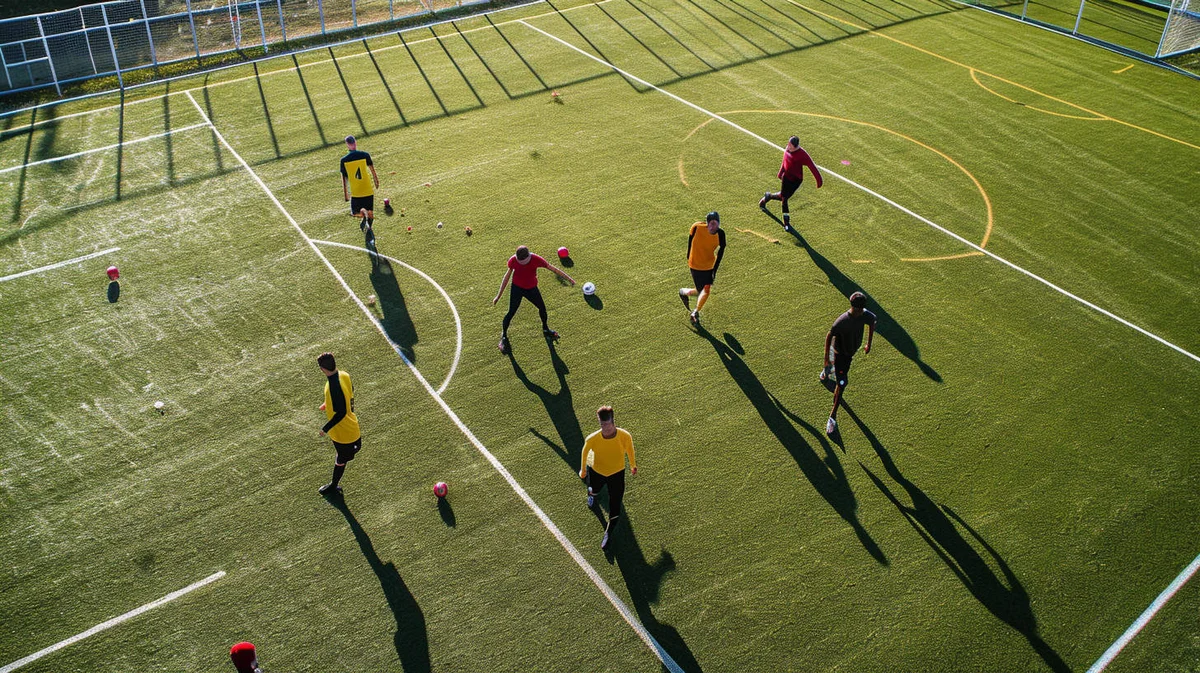
Soccer Tactics Training: Formations, Drills & Strategy Guide
Soccer tactics training is the bridge between individual skill and team performance. A player can dribble well and still look lost without support angles, defensive shape, or pressing triggers. A team can also work hard and still struggle if it does not understand spacing, transition, and how the ball should move through the shape.
This guide explains the tactical ideas youth players and coaches should understand first: why tactics matter, which concepts appear in every match, how formations shape decisions, and which drills actually help those ideas stick.
Why Soccer Tactics Matter
Tactics give players context. They answer questions like: Where should I be when we build out? When do we press? Who covers if the fullback goes? Without tactical structure, teams rely on effort alone. With a clear structure, players make faster and smarter decisions.
Key Tactical Concepts Every Team Should Train
- Spacing: create passing lanes without bunching around the ball
- Support angles: give the player on the ball safe and progressive options
- Pressing triggers: press on cues such as a poor touch or back pass
- Transition: react quickly after winning or losing possession
- Compact defending: protect central areas and move together
- Switching play: move the ball away from pressure to attack weak-side space
Formations Quick Reference
| Formation | Strength | Weakness | Best fit |
|---|---|---|---|
| 4-3-3 | Natural width and midfield triangles | Lone striker can become isolated | Teams with wide attackers |
| 4-4-2 | Clear roles and compact shape | Can lose midfield numbers | Younger teams learning team shape |
| 3-4-3 | Pressing and attacking overloads | Wide defensive space | Teams with athletic wing-backs |
For a deeper look at one of the more aggressive systems, read our guide to the 3-4-3 soccer formation.
How to Teach Tactics to Youth Players
Youth players learn tactics best when the ideas are tied to repeated game situations. Instead of lecturing for 15 minutes, coach one concept at a time and let players experience it in small-sided games. Freeze play briefly, correct spacing, then restart quickly.
- Teach one principle per session
- Use a clear trigger or cue phrase
- Progress from small-sided games to bigger shapes
- Repeat the same problem in different field sizes
Tactical Drills That Transfer to Matches
1. Positional rondo
Use a rondo to teach support angles, scanning, and quick passing decisions. The goal is not only keeping the ball. It is teaching players how to create the next option before pressure arrives.
2. Transition game
Play a small-sided game where teams have five seconds to win the ball back after losing it. This teaches immediate defensive reaction and transition awareness.
3. Channel defending
Set up wide channels so players learn when to delay, when to press, and how teammates cover inside. This pairs well with defensive soccer drills.
4. Third-man build-out pattern
Coach the back line and midfield to solve pressure with simple third-player combinations. This is one of the easiest ways to move from random passing to purposeful buildup.
5. Final-third combination game
Use overloads and reduced space so players learn wall passes, cutbacks, and timing around the box. This works especially well alongside offensive soccer drills.
When to Use a Tactical Board
A tactical board is useful when you need to simplify roles and show spacing quickly. It should support the training session, not replace it. Show the picture, then make the players solve the problem on the field. The best tactical board session is short and specific.
Coaching Perspective and Trusted Resources
Tactical training should match the age and understanding of the team. If players are still learning basic receiving and support habits, the session should stay simple. If the group is older and more advanced, you can coach pressing traps, back-line shifts, and build-out patterns in more detail. For broader development frameworks, review the coaching resources available through US Youth Soccer and U.S. Soccer coaching education.
FAQs
What are the basic soccer tactics?
The basics include spacing, support, pressing, compact defending, transitions, and switching play away from pressure.
What is the best formation for youth soccer?
The best formation is the one your players understand and can execute. Simpler shapes are often better for younger teams, while older teams can handle more detailed systems.
How do I teach tactics to young players?
Use short explanations, clear cues, and small-sided games that repeat the same tactical problem until players recognize it on their own.
Keep Reading
To connect tactics with execution, review soccer teamwork and our guide on how to get better at soccer.
Related Articles

How to Gain Confidence in Soccer: 8 Proven Mental Strategies
Build your soccer confidence with 8 proven mental strategies — positive self-talk, goal-setting, handling mistakes, and pre-game routines for youth players.

How to Get Better at Soccer: 10 Proven Tips for Youth Players
Want to get better at soccer? These 10 proven tips cover ball control, fitness, mental toughness, tactical thinking, and consistent training habits.

Soccer Speed Training: 7 Drills to Get Faster on the Field
Improve your speed on the soccer field with interval sprints, acceleration drills, and agility work. Proven speed training methods for youth players and coaches.

Fun Christmas Soccer Training Activities for Kids and Teams
Find fun Christmas soccer training activities for kids, teams, and winter break sessions, with festive drills for dribbling, passing, and shooting.