
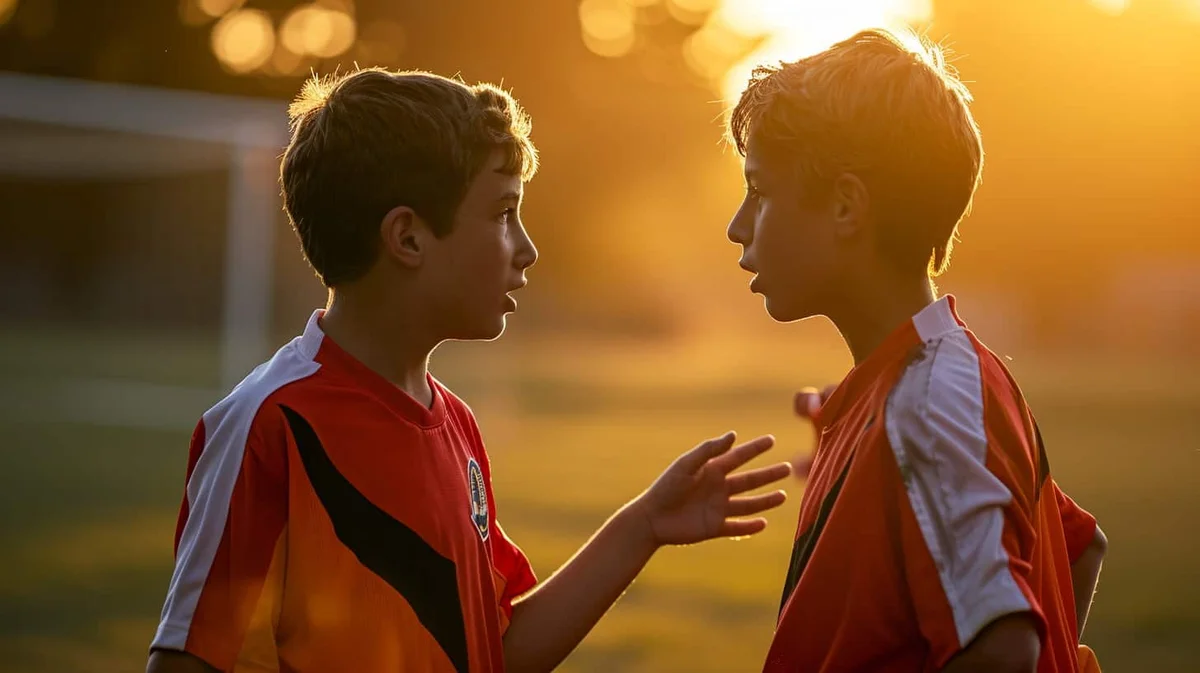
Soccer Teamwork: 7 Communication Drills to Build Team Chemistry
Soccer teamwork is built on trust, communication, and repeated habits players can rely on under pressure. Skilled players still struggle when they do not move together, talk early, or understand how their role connects to the rest of the team. Good coaches train teamwork on purpose instead of assuming it will appear automatically.
Why communication is the foundation of team soccer
The best youth teams talk early and clearly. Defenders organize shape, midfielders ask for support, and attackers communicate timing and runs. Communication reduces hesitation, helps players recover after mistakes, and keeps the team connected during transitions.
Roles and responsibilities on the field
- Goalkeeper: organize the line, call pressure, and direct defensive shape.
- Defenders: talk about marks, cover, and recovery runs.
- Midfielders: call for support, turns, and switches.
- Forwards: cue pressing, runs behind, and cutback options.
7 communication drills to build soccer teamwork
1. Color-call passing
Players call the receiver's color or number before passing. This creates early communication habits.
2. Name-and-turn rondo
The player on the ball must call the next option before receiving, not after. This improves scanning and speed of thought.
3. Three-zone buildout game
Teams move the ball through zones while players communicate support angles and switching options.
4. Pressing cue game
One player calls the pressing trigger and the group reacts together. This builds collective timing.
5. Blind-side awareness drill
Defenders and midfielders communicate pressure and shoulder checks before receiving.
6. Transition race
After a turnover, the team must organize shape and communicate roles immediately.
7. Finish-the-move pattern play
Players must talk through the combination before and during the move, reinforcing timing and chemistry.
How coaches can build team chemistry off the field
- Set clear behavior standards
- Use partner and small-group accountability
- Review clips together when possible
- Talk openly about resilience after mistakes
- Create roles so players know how they help the group
Examples of real teamwork in soccer
Teamwork shows up in simple, repeatable moments: a fullback getting cover behind a high press, a midfielder calling a turn, or a forward clearing space for a teammate's run. Great chemistry is not only about motivation. It is about shared understanding in realistic match situations.
How this connects to tactics and development
Teamwork improves when players understand shape, transitions, and their jobs within a system. That is why teamwork should connect to soccer tactics training, offensive drills, and mental toughness. Individual improvement still matters too, so players should also work through how to get better at soccer.
Frequently asked questions
How do you build teamwork in soccer?
Use communication drills, clear player roles, repeated team habits, and off-field accountability that reinforces trust.
What are good communication drills for soccer?
Color-call passing, rondos with verbal cues, pressing trigger games, and transition drills are all strong options.
How do you improve team chemistry in youth soccer?
Give players simple roles, reinforce positive communication, and create training tasks where success depends on working together.
Keep Reading
To build on this topic, continue with soccer tactics training, offensive soccer drills, and mental toughness for youth soccer.
Related Articles

How to Gain Confidence in Soccer: 8 Proven Mental Strategies
Build your soccer confidence with 8 proven mental strategies — positive self-talk, goal-setting, handling mistakes, and pre-game routines for youth players.

How to Get Better at Soccer: 10 Proven Tips for Youth Players
Want to get better at soccer? These 10 proven tips cover ball control, fitness, mental toughness, tactical thinking, and consistent training habits.
Soccer Speed Training: 7 Drills to Get Faster on the Field
Improve your speed on the soccer field with interval sprints, acceleration drills, and agility work. Proven speed training methods for youth players and coaches.

Fun Christmas Soccer Training Activities for Kids and Teams
Find fun Christmas soccer training activities for kids, teams, and winter break sessions, with festive drills for dribbling, passing, and shooting.