
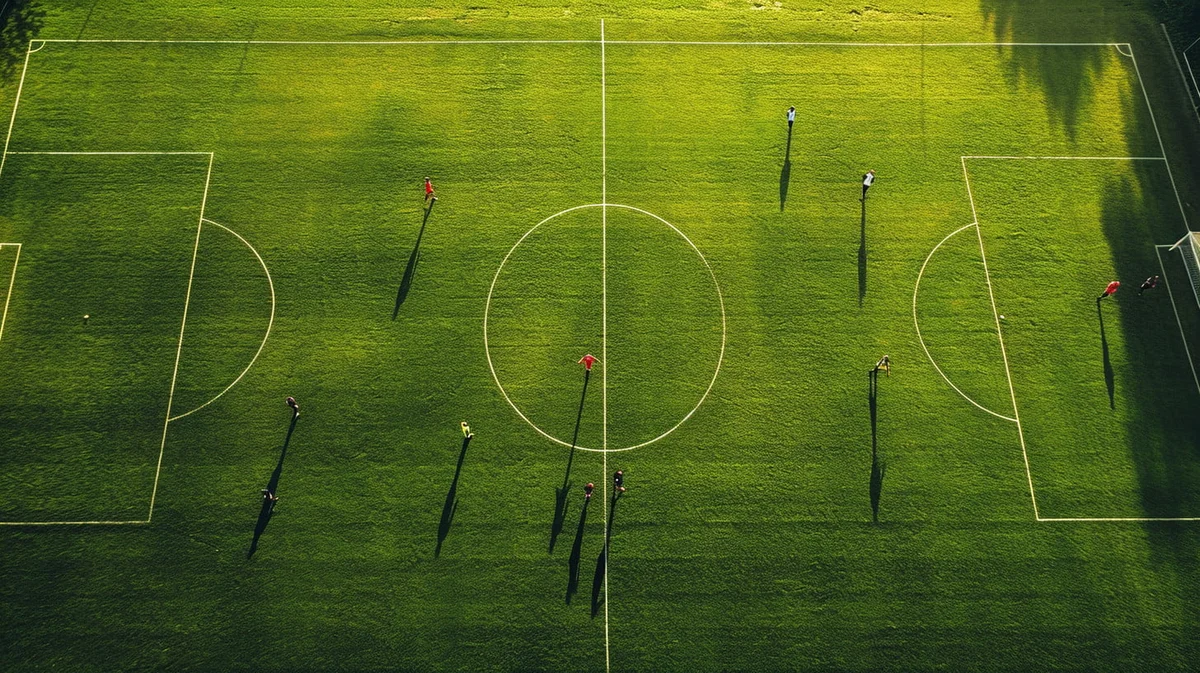
3-4-3 Soccer Formation: Tactics, Roles & Drills Explained
The 3-4-3 soccer formation is an aggressive shape built to create width, pressing options, and three clear attacking lanes. When it is coached well, it can stretch opponents and create dangerous overloads. When it is coached poorly, it can leave huge spaces in wide defensive areas.
This guide explains how the 3-4-3 works, what each role must do, when youth teams should use it, and which drills help players understand the system. From a coaching perspective, the formation only works when the wing-backs and back three communicate constantly.
What Is the 3-4-3 Formation in Soccer?
The 3-4-3 uses three defenders, four midfielders, and three forwards. In possession, it often looks like a wide attacking shape with wing-backs pushing high. Defensively, it can drop into a 5-4-1 or 5-2-3 depending on where the wingers and wing-backs recover.
3-4-3 Formation Diagram and Core Shape
- Back three: left center back, central center back, right center back
- Midfield four: left wing-back, two central midfielders, right wing-back
- Front three: left forward, center forward, right forward
The shape gives natural width and lets the front line press in a triangle. It also asks a lot from the wing-backs, who must defend deep and still support the attack.
Why Coaches Use the 3-4-3
Coaches choose the 3-4-3 when they want to attack with width without giving up central numbers. It can be especially effective for teams with mobile forwards, a smart holding midfielder, and wing-backs who can run all day. It also creates clear pressing triggers because the front three can block central passes while steering play wide.
Positional Roles in the 3-4-3
Back three
The central center back organizes the line, protects the space behind, and covers the penalty area. The outside center backs must be comfortable defending wider channels, stepping into midfield, and dealing with quick transitions.
Wing-backs
Wing-backs are the engine of the system. They provide width in possession, recover quickly in defensive transition, and often determine whether the shape feels balanced or reckless. If your wing-backs cannot defend 1v1 and still contribute forward, the system usually breaks down.
Central midfielders
The two central midfielders keep the shape connected. One often provides balance and protection in front of the back three, while the other helps progress the ball. Both need awareness, communication, and the discipline to cover when wing-backs push high.
Front three
The front line can be built in different ways: two inside forwards around a striker, two wide wingers around a target forward, or a false nine with runners beyond. Whatever the variation, the front three must press together and attack the box with coordinated timing.
Strengths of the 3-4-3
- Natural width: Wing-backs and wide forwards stretch the field quickly.
- Strong pressing shape: The front three can press center backs and force play wide.
- Three attacking lanes: Teams can attack through both wings and the center at the same time.
- Flexible defensive recovery: It can become a back five when needed.
Weaknesses of the 3-4-3
- Wide defensive gaps: Opponents can attack the space behind advanced wing-backs.
- Heavy physical load: Wing-backs and outside center backs must cover large areas.
- Requires discipline: Poor communication can leave the back three exposed in transition.
- Not always ideal for young teams: Younger players may struggle with the recovery responsibilities.
How the 3-4-3 Compares to Other Formations
| Formation | Best feature | Main risk | Typical fit |
|---|---|---|---|
| 3-4-3 | Pressing and wide attacking numbers | Space behind wing-backs | Teams with athletic wing-backs |
| 4-3-3 | Balanced width and midfield triangles | Can leave the lone striker isolated | Teams with strong wide attackers |
| 4-4-2 | Clear roles and compact defending | Can be outnumbered in midfield | Youth teams that need clarity |
Which Teams and Coaches Have Used the 3-4-3?
The 3-4-3 has shown up in several high-level systems. Antonio Conte used a back-three structure to strong effect at Chelsea, especially when the wing-backs became key attacking outlets. Earlier versions of the 3-4-3 and 3-4-1-2 also appeared in Barcelona's tactical history and in other possession-heavy systems where center backs could step forward and midfielders could rotate intelligently.
The lesson for youth coaches is not to copy elite teams blindly. It is to understand why the shape worked: athletic width, disciplined rest defense, and clear roles in transition.
Is the 3-4-3 Good for Youth Soccer?
It can be, but only for the right group. For older or tactically mature teams, the 3-4-3 can help teach pressing, spacing, and transition coverage. For younger teams, a simpler system may be easier to teach. From a youth coaching standpoint, the question is not whether the shape is fashionable. The question is whether your players can actually execute the wing-back recovery runs and wide defensive rotations.
Coaching Points for Teaching the 3-4-3
- Coach the wing-backs first. They carry the biggest workload.
- Teach the outside center backs how to defend channels, not just central zones.
- Define when the front three press and when they drop.
- Rehearse the team's recovery shape after possession is lost.
- Use small-sided constraints before expecting full-pitch tactical understanding.
6 Drills to Teach the 3-4-3
1. Back-three shifting drill
Use half a field and move the ball side to side with neutral attackers. Coach the back three to slide together, protect the central lane, and communicate who steps and who covers.
2. Wing-back recovery races
Start wing-backs high and wide, then play a transition ball into the channel behind them. The goal is to train immediate recovery runs and support from the nearest outside center back.
3. Midfield triangle build-out
Use the back three plus two central midfielders against a pressing front line. Focus on support angles, third-man combinations, and safe progression through the center.
4. Front-three pressing triggers
Coach the front line to press as a unit based on back pass, slow touch, or pass into a sideline trap. The front three should learn to angle the press instead of chasing randomly.
5. Wide overload crossing game
Create a channel where the wing-back and winger combine against one defender before serving the box. This teaches timing, overlaps, and the advantage the 3-4-3 can create out wide.
6. Transition to back five game
Play an 8v8 or 9v9 conditioned game where the wing-backs must recover behind the ball within three seconds of losing possession. Stop play to correct spacing and distances.
Trusted Coaching Resources
If you coach youth players, use formal coaching resources as a reference point when teaching tactical systems. US Youth Soccer and U.S. Soccer coaching education both offer development frameworks that are more valuable than copying shapes without context.
FAQs
What is the 3-4-3 formation in soccer?
It is a shape with three defenders, four midfielders, and three forwards. It is designed to create width, pressing angles, and strong attacking numbers.
What are the strengths of the 3-4-3?
Its main strengths are wide attacking pressure, front-foot pressing, and the ability to create overloads in multiple attacking lanes.
Is the 3-4-3 good for youth soccer?
It can work for older youth teams with disciplined wing-backs and smart center backs, but simpler systems are often easier to teach to younger groups.
Related Tactical Reading
To go deeper, study soccer tactics, review defensive soccer drills, and connect the shape to broader player development with how to get better at soccer.
Related Articles

How to Gain Confidence in Soccer: 8 Proven Mental Strategies
Build your soccer confidence with 8 proven mental strategies — positive self-talk, goal-setting, handling mistakes, and pre-game routines for youth players.

How to Get Better at Soccer: 10 Proven Tips for Youth Players
Want to get better at soccer? These 10 proven tips cover ball control, fitness, mental toughness, tactical thinking, and consistent training habits.
Soccer Speed Training: 7 Drills to Get Faster on the Field
Improve your speed on the soccer field with interval sprints, acceleration drills, and agility work. Proven speed training methods for youth players and coaches.

Fun Christmas Soccer Training Activities for Kids and Teams
Find fun Christmas soccer training activities for kids, teams, and winter break sessions, with festive drills for dribbling, passing, and shooting.